

Table of Contents
- Start With the Recipient, Not the Product
- Personalized Gift Ideas for Every Occasion
- How to Make a Gift Feel More Personal
- Meaningful Gifts for Best Friends
- Personalization Techniques That Go Beyond a Name
- Budgeting for Personalized Gifts Without Cutting Corners
- When a Personalized Gift Misses the Mark
- Frequently Asked Questions
Last Updated: October 2, 2026
Start With the Recipient, Not the Product
Learning how to choose meaningful personalized gifts starts with one shift: study the person before you study the catalog. A personalized gift only works when the customization proves you were paying attention. When you lead with the product, you end up with a monogrammed item that could belong to anyone. When you lead with the recipient, even a simple gift lands with weight.
Build a Quick Recipient Profile
A recipient profile is a short mental (or written) summary of a person's interests, routines, and history with you. Build one before you shop, and the right gift usually presents itself.
Answer these five questions:
- What do they do most weekends?
- What do they talk about unprompted?
- What's a memory only the two of you share?
- What do they collect, wear, or display?
- What phase of life are they in right now?
Why the Psychology of Gift-Giving Matters
Gift-giving carries emotional weight because it tests a relationship. The recipient isn't judging the object; they're reading what the object says about your attention to them. A gift that reflects a shared memory or a specific hobby signals, "I see you." A generic gift card signals, "I ran out of time." That gap is emotional resonance, and it's the entire game.

Personalized Gift Ideas for Every Occasion
Occasion-based gifting gets easier once you stop treating every event the same. Each occasion carries a different emotional assignment, and the personalization should answer that assignment rather than just mark the date. Most guides list products by occasion. A more useful approach is to identify what the occasion is actually asking the gift to do, then let the personalization follow.
The Emotional Assignment Behind Each Occasion
- Birthdays ask the gift to say I see who you are right now. Personalization should reflect a current interest, hobby, or phase of life, not a past one.
- Anniversaries ask the gift to say I remember where we have been. Dates, shared places, and references to early moments do the work.
- Graduations ask the gift to say I believe in where you are going. Forward-looking personalization, a name, a class year, or a message about what is next, fits better than nostalgia.
- Housewarmings and new chapters ask the gift to say I am part of your next chapter. A name, a shared reference, or a date tied to the move works better than a generic home item.
- Just-because gifts ask the gift to say I was thinking about you unprompted. These reward inside references more than any formal occasion, because the absence of a reason is itself the message.
Milestone Occasions: Birthdays, Anniversaries, and Graduations
Milestones call for keepsakes, not clutter. For a milestone birthday, lean into hobbies: a custom-printed shirt featuring a hobby they actually pursue beats a generic gag gift. For anniversaries, dates and shared memories do the heavy lifting, a wedding date, a first-trip reference, or an inside joke from early in the relationship. Graduations reward forward-looking personalization: a name, a class year, or a message about what is next.
Holiday Gifting Without the Guesswork
Holiday gifting rewards planning over panic. The most common mistake is buying in December what you should have decided in October. Start with your recipient profiles, then match each person to one clear idea instead of browsing aimlessly. Holiday-specific personalization works well here, and a custom gift bag or sack with a name on it turns the wrapping itself into part of the gift.

How to Make a Gift Feel More Personal
The fastest way to make a gift feel personal is to add a detail only you would know. Store-bought items become meaningful the moment you attach a specific memory, name, date, or message to them. You don't need a custom-made product to create a personal gift. You need one detail that proves the gift wasn't picked at random.
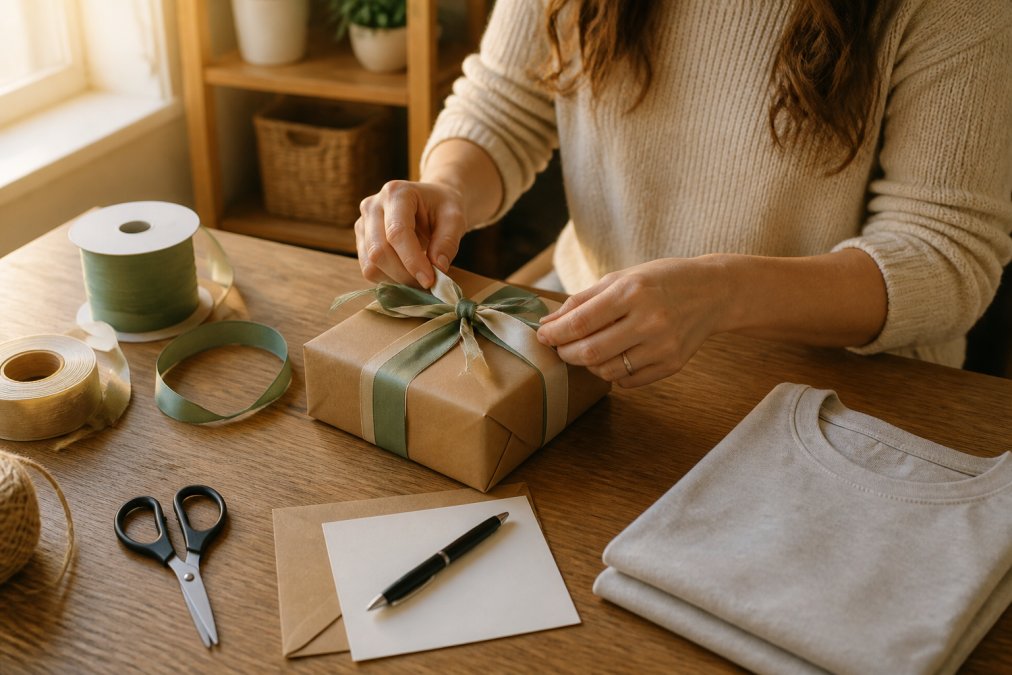
Try these upgrades:
- Add a handwritten note that names the exact memory behind the gift
- Pair a store-bought item with one customized element, like a printed shirt or an engraved tag
- Choose a color or design that matches something they already own and love
- Present it in a way that references the story, not just the object
Meaningful Gifts for Best Friends
Meaningful gifts for best friends come from shared history, not price tags. The friendship already supplies the raw material: years of inside jokes, trips, and running references. Your job is simply to turn one of those into something they can hold.

Inside Jokes, Shared Memories, and the Details That Prove You Listen
The best friend gifts are almost embarrassingly specific. A phrase only the two of you use. A callback to a trip that went sideways. A reference to a phase of life you survived together. That specificity is what makes a gift feel curated rather than purchased. When you're choosing, ask yourself: would anyone else understand this reference? If the answer is no, you're on the right track.
Personalization Techniques That Go Beyond a Name
A name is the entry-level version of personalization. The techniques that actually create sentimental value go further, but the mistake most gift-givers make is stacking every technique onto one item. More personalization is not automatically more meaningful. The goal is to match the technique to the relationship and the object.
- Identity markers (initials, monograms, names) say this belongs to you. They are safe, universal, and work on almost any object.
- Time anchors (dates, years, coordinates) say this moment mattered. They convert an object into a commemoration.
- Voice markers (a short custom message, a phrase, an inside reference) say I know you specifically. They carry the most weight and the most risk.
Choosing the Right Layer for the Object
The object constrains the technique. A monogram needs a surface that reads cleanly at small scale, which is why it works on leather, glassware, and jewelry but gets lost on a busy printed graphic. A date works best on something that will be displayed or worn repeatedly, so it keeps re-triggering the memory. A custom message needs enough surface area to be legible, which is why it lands on cards, blankets, and framed prints but crowds a small keychain.
Customize Your Long Sleeve T-Shirt Here →
When to Combine Techniques
Combining works when the layers reinforce each other rather than compete. A dated item with a short message reads as commemorative and personal at once. A monogram plus a long paragraph reads as cluttered. The practical ceiling is usually two layers. If you find yourself adding a third, you are probably compensating for a weak choice in the first two.
Initials, Monograms, Dates, and Custom Messages
- Initials and monograms work for anyone and suit a minimalist style. Best on hard goods and accessories. Low risk, low emotional ceiling.
- Dates anchor a gift to a milestone, anniversary, or birthday. Best when the date means something the recipient already celebrates.
- Custom messages carry the most emotional weight when they are short and specific. A single sentence that names a real memory outperforms a paragraph of general sentiment.
- Names are the baseline, useful but rarely enough on their own. Treat them as a foundation, not a finish.
A monogrammed item reads as elegant and understated. A dated item reads as commemorative. A custom message reads as personal. Combine two and the gift stops feeling generic entirely.
Budgeting for Personalized Gifts Without Cutting Corners
You can give a meaningful personalized gift at almost any budget, because personalization is about attention, not price. The mistake is assuming "personalized" means "expensive." It doesn't. A well-chosen low-cost item with the right detail outperforms a pricey generic one every time. Set a per-person budget first, then let the recipient profile guide where the money goes. Spend on the item that carries the personalization; save on the packaging and extras.
| Budget Level | Best Approach | Example |
|---|---|---|
| Under $25 | One strong personalized detail | Custom gift bag with a name, or a printed tee |
| $25-$50 | Customized apparel or accessory | Custom long sleeve tee with a chosen design |
| $50+ | Layered gift with a keepsake | Apparel plus a handwritten card and gift card |
Ethical Sourcing and Small-Business Alternatives
Where you buy is part of the gift's story. Many shoppers now prefer supporting small, family-owned businesses over mass-market retailers, and that preference carries into gifting. A handcrafted or small-batch item often comes with more care in the details, and buying from a family-run shop means your money supports a real household rather than a warehouse. When you can, ask who makes the product and where the materials come from.
When a Personalized Gift Misses the Mark
Personalized gifts fail for predictable reasons, and most of them are fixable. The most common miss is personalizing for the wrong person: a bold statement design for someone with a minimalist wardrobe, or a joke that only lands for you. The second most common is a sizing or fit issue, which turns a thoughtful gift into a return errand. The third is durability: a print that fades or cracks after a few washes.
A few practical safeguards:
- Confirm sizes before ordering apparel, especially if you're guessing
- Match the design's boldness to the recipient's actual style
- Buy from sellers with a clear return or exchange policy
- Order early so a misfire can still be corrected before the occasion
Frequently Asked Questions
What makes a gift truly meaningful?
A meaningful gift shows the recipient you paid attention. It connects to something specific: a hobby, a shared memory, or a milestone they care about. Research on gift-giving suggests that recipients value the thought and emotional resonance behind a present more than its price tag. A $15 personalized item that references an inside joke often lands better than a generic $100 gift card.
How do you choose a personalized gift for someone who has everything?
Focus on experiences, consumables, or items tied to their identity rather than objects they already own. Custom apparel, a personalized message on a keepsake, or a gift card to a small business they love all work well. Taylor's Expressions offers a $10 gift card that lets them pick their own customizable apparel, which solves the 'has everything' problem without feeling impersonal.
What are the best ways to personalize a gift beyond just adding a name?
Use initials, monograms, significant dates, or a short custom message. You can also match the item to a recipient's hobby, favorite color, or personality type. For example, a custom long sleeve t-shirt from Taylor's Expressions lets you choose the color, size, and design, so the final piece reflects their style, not just their name.
How far in advance should you order personalized gifts?
Order at least two to three weeks before you need the gift in hand. Custom orders often take extra processing time, especially during holidays. Taylor's Expressions notes that customized orders may take additional time to process, so if you need a gift within two weeks, choose an in-stock personalized item like a Santa sack or gift card instead of a fully custom order.
How can you ensure a personalized gift fits the recipient's personal style?
Check what they actually wear or use daily. Look at their color choices, whether they prefer bold graphics or minimalist designs, and the fit of their favorite items. If you're unsure, a gift card removes the risk. Taylor's Expressions offers sizes small to 2XL and a range of designs, so you can match their preferences or let them choose.
What is the 5 gift rule for meaningful giving?
The 5 gift rule suggests giving something they want, something they need, something to wear, something to read, and something to experience. It keeps gift-giving focused and prevents overspending. For personalized gifts, you can apply it by choosing one custom wearable item, one keepsake, and one experience-based gift that ties back to a shared interest.
Choosing a meaningful personalized gift is less about finding the perfect product and more about proving you know the person. It takes a little more thought and a little more planning, and that's exactly why it lands. Taylor's Expressions makes that easier with customizable apparel, regularly updated designs, and a family-run team that treats every order like it matters. Get started with Taylor's Expressions and give a gift that says you were paying attention.